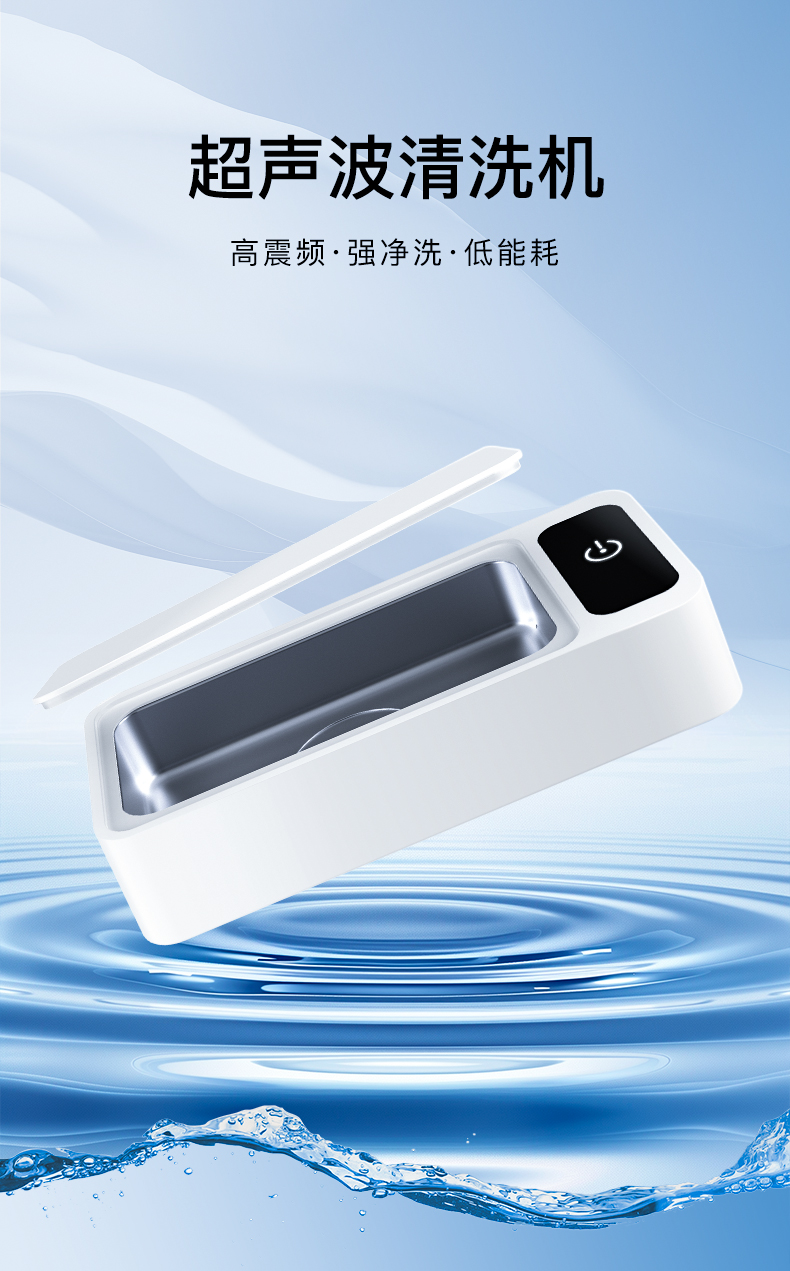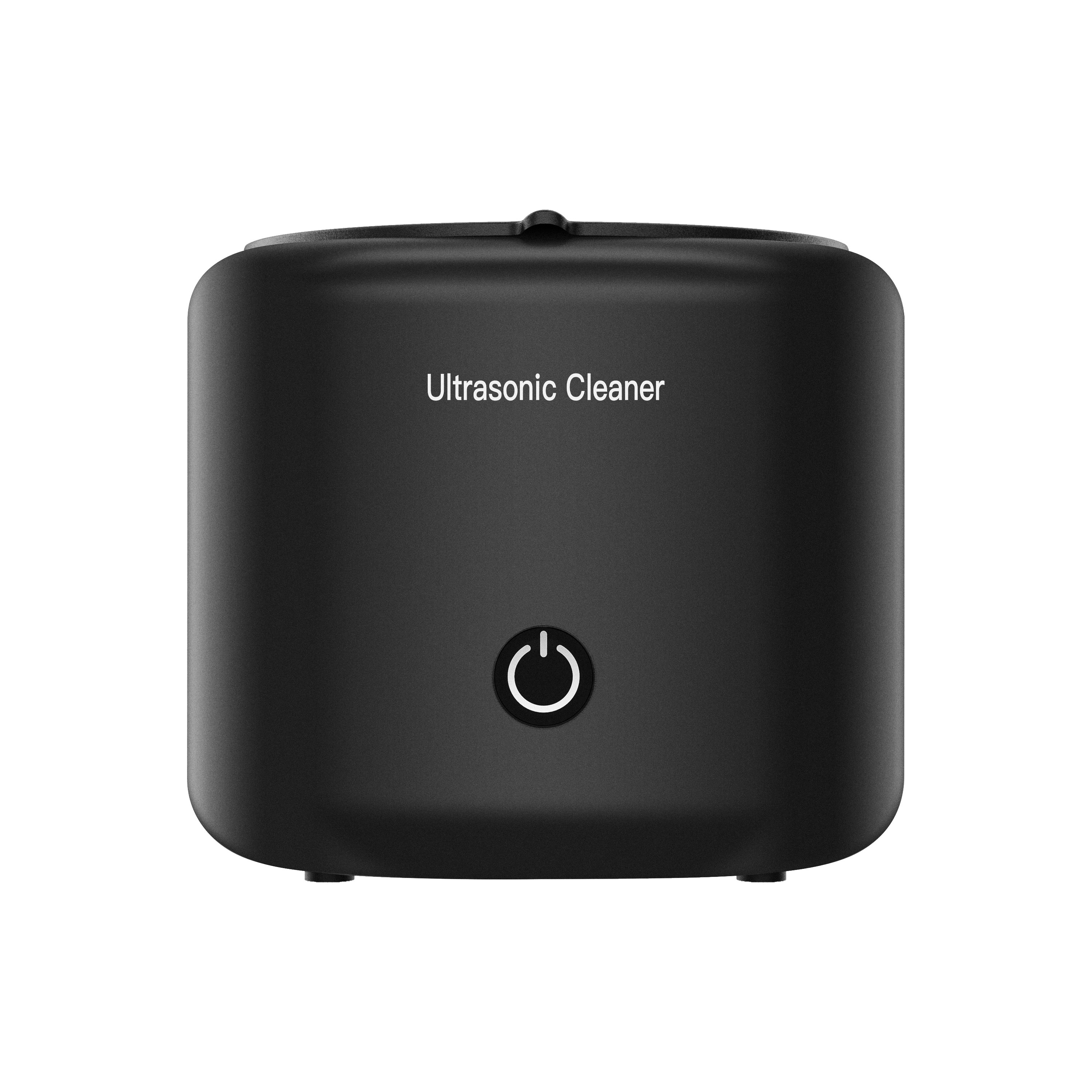
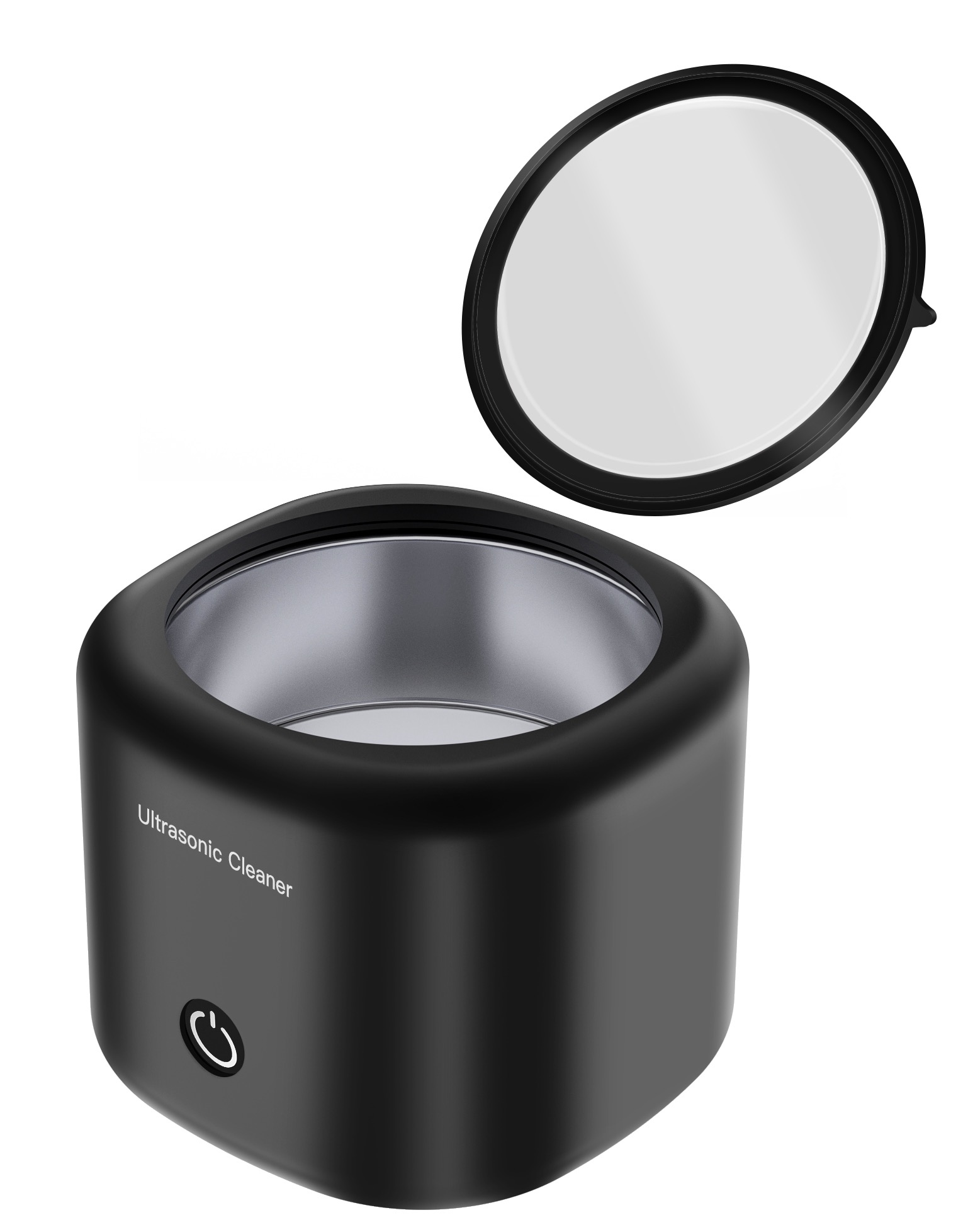
The heated one
One touch, one ten-minute cycle: three minutes of cavitation with heat, seven minutes held at 60 ±3 °C. Palm-size, 0.6 kg, built to live on the chairside counter.
Request trade pricingUC23233-1 pairs 45 kHz cavitation with a bath thermostatically held at 60 ±3 °C — the window where shape-memory aligner resin relaxes back toward its designed geometry. One touch starts a ten-minute cycle that cleans, deodorises and recovers warpage in the same pass, then stops by itself.
Sample units available · MOQ from 10 units · OEM from 500 units
Cavitation reaches the relief details, wire gaps and margins a brush cannot enter — and the heat cycle is what separates a cleaner from a shape-recovery device.
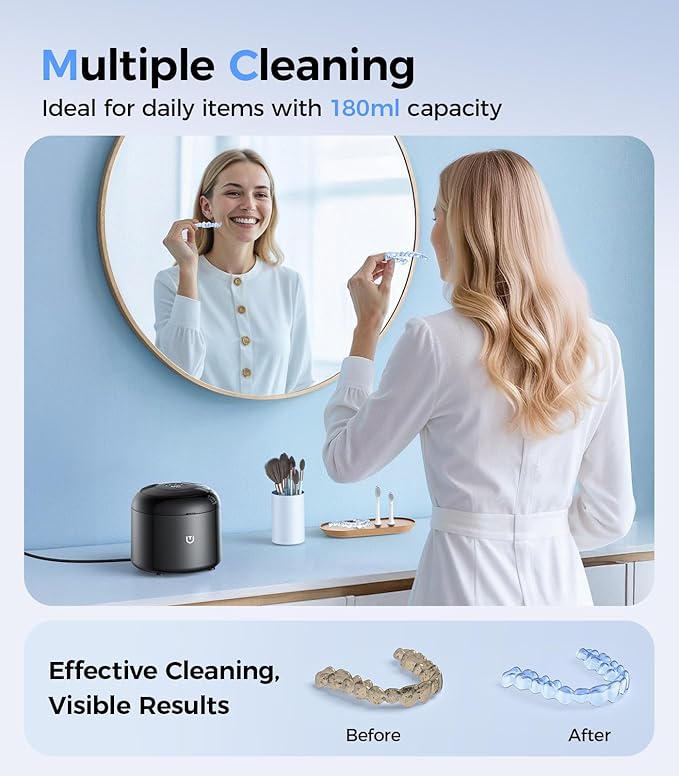
SmartTrack-type trays and 3D-printed shape-memory aligners. Non-abrasive, so the surface stays clear instead of clouding over.
Essix, Vivera and Hawley. The cycle lifts the plaque that collects around wirework and along the acrylic margin.
Splints, bite guards and sleep-apnoea devices. Removes the protein film behind morning taste and odour.
Loosens adhesive residue without bleach or peroxide, so there is no stress-cracking in the acrylic.
Front-desk staff learn this in under a minute. That matters more than any spec when you are rolling a protocol across five chairs.
180 ml of tap water. No chemicals needed — and nothing to reorder every month.
One pair of trays, or a retainer plus a night guard. Face it upward so cavitation reaches the fitting surface.
No programme to select, no timer to set. One touch runs a single ten-minute cycle: heater and transducer work together for the first three minutes, then the bath is held at 60 ±3 °C for the remaining seven. It switches itself off at the end.
Rinse under the tap, shake dry, return to the patient. The tray is clean and closer to its designed shape.
Aligner resin is a shape-memory material. Heat above its transition point lets the polymer relax back toward the geometry it was printed in. Too much heat, held too long, and it over-relaxes. The window is the whole design problem.
Micro-bubbles form and implode against every wetted surface, lifting plaque matrix and protein film out of the relief details, button cut-outs and trim lines.
Memory resin is engineered to relax in a transition band. Held in the middle of that band, a warped tray returns toward its printed geometry instead of staying sprung.
Ten minutes, then the machine stops. The bath is held at 60 ±3 °C rather than driven to the top of the heater's range, so the tray never sits in the region where polymer chains keep relaxing and programmed force is lost.
The slider spans 20–80 °C so you can see the whole window; the unit itself never goes above its 60 ±3 °C hold, so the 70 °C+ region on this chart is not reachable on the machine. Illustration of the relaxation window, not a measured curve. Validate the setpoint against your resin supplier's instructions for use before publishing a protocol.
It is the first question every orthodontist asks, and it deserves a straight answer rather than a footnote.
The heater only ever runs inside a ten-minute programme, and only holds — it ramps for three minutes, then pulses on its thermostat to stay at 60 ±3 °C. A bounded exposure is fundamentally different from a hot plate left switched on at the back of a bench.
Thermoformed PETG and PU trays begin to over-relax and lose programmed force above roughly 70 °C sustained. The working window sits well below that, and the cycle is short.
No bleach, no peroxide, no effervescent tablets. Those are the usual cause of stress-cracking, cloudiness and the faint taste patients complain about.
UC23233-1 is a cleaning and shape-recovery device. It is not a steriliser and does not replace autoclave or cold-sterilisation protocols. Always confirm the setpoint against the specific resin supplier's instructions for use.
Four common chairside routines, scored on the things that actually change a patient's outcome.
| UC23233-1 heat cycle |
Cleaning tablet | Brush + paste | UV storage case | Cold ultrasonic | |
|---|---|---|---|---|---|
| Biofilm in relief details | Removed | Surface only | Missed | None | Removed |
| Odour source | Removed | Masked | Partial | None | Removed |
| Recovers warped trays | Yes — 60 °C | No | No | No | No |
| Abrasive to the surface | No | No | Yes — scratches | No | No |
| Chairside time | 10 min | 15–30 min | 2–3 min | n/a | 6 min |
| Recurring cost | None | Per tablet | Paste | None | None |
| Patient-visible proof of care | High | None | Low | Medium | Medium |
UV columns refer to storage cases, which irradiate a dry appliance and cannot reach the fitting surface once biofilm has formed. UV-C units with a wet tank are compared separately in the model line-up below.
Most distributors want a single supplier who can cover a clinic shelf and a retail shelf at the same time. That is what this range is built to do.
One touch, one ten-minute cycle: three minutes of cavitation with heat, seven minutes held at 60 ±3 °C. Palm-size, 0.6 kg, built to live on the chairside counter.
Request trade pricing
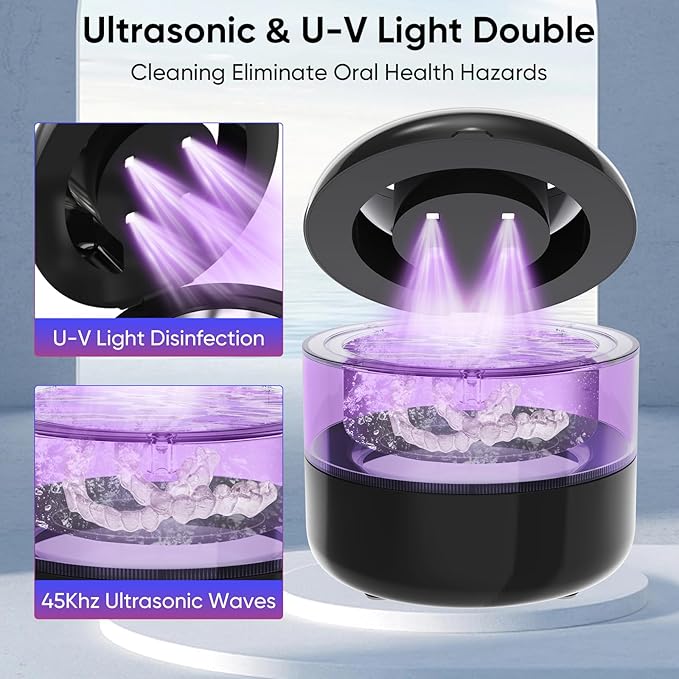
Four programmes, live countdown, lid interlock on the UV-C, and a smart temperature ceiling. The tier that sells on a retail shelf and bundles into aligner subscriptions.
Request the file pack
Dual one-touch programmes with a four-LED UV assist, at the price point that gets a first order signed. The natural add-on for a distributor already stocking the flagship.
Add to an enquiry
A wide flat SUS304 tank for full-frame eyewear, jewellery, dentures and assistant-side multi-use. Same one-touch simplicity, sized for counters where round is too small.
Add to an enquiryThese two sit at the same tank size and the same price neighbourhood. The difference is who they are for.
Heated · held at 60 ±3 °C
Best for orthodontic practices, aligner labs and anyone whose patients keep coming back with deformed trays.
UV-C · four programmes · LED display
Best for retail shelves, aligner-subscription bundles and practices that resell to patients.
Full data sheet, EMC report and IFU template are available under NDA for distribution partners.
Certification: CE, FCC and RoHS documentation is issued per model and destination. Ask for the file pack and check the model number on each document before quoting it to a customer.
We manufacture, so the terms are ours to set. No trading company in the middle, no retail competition against our own partners.
Put one unit on the counter and run it for a month. If it does not earn its space, send it back.
Territory pricing, stock support and a demo kit that fits in a laptop bag.
Your brand, your packaging, your colour. Tooling and firmware changes quoted separately.
Placeholder — add a two-line quote from an orthodontist here about how the heat cycle changed the way the practice handles deformed trays.
Placeholder — a distributor quote works well here: stock turn, sell-through time, or how the demo pack helps close practice visits.
Placeholder — a patient-facing quote from a practice's Google review reads well here and adds social proof without a clinical claim.
These three cards are placeholders in the template. Replace them with real quotes before launch, or delete this section — unverified testimonials are the fastest way to lose a procurement committee's trust.
Send the market, the model and an indicative quantity. You get a price, a lead time and the certificate list for that destination — usually within one working day.